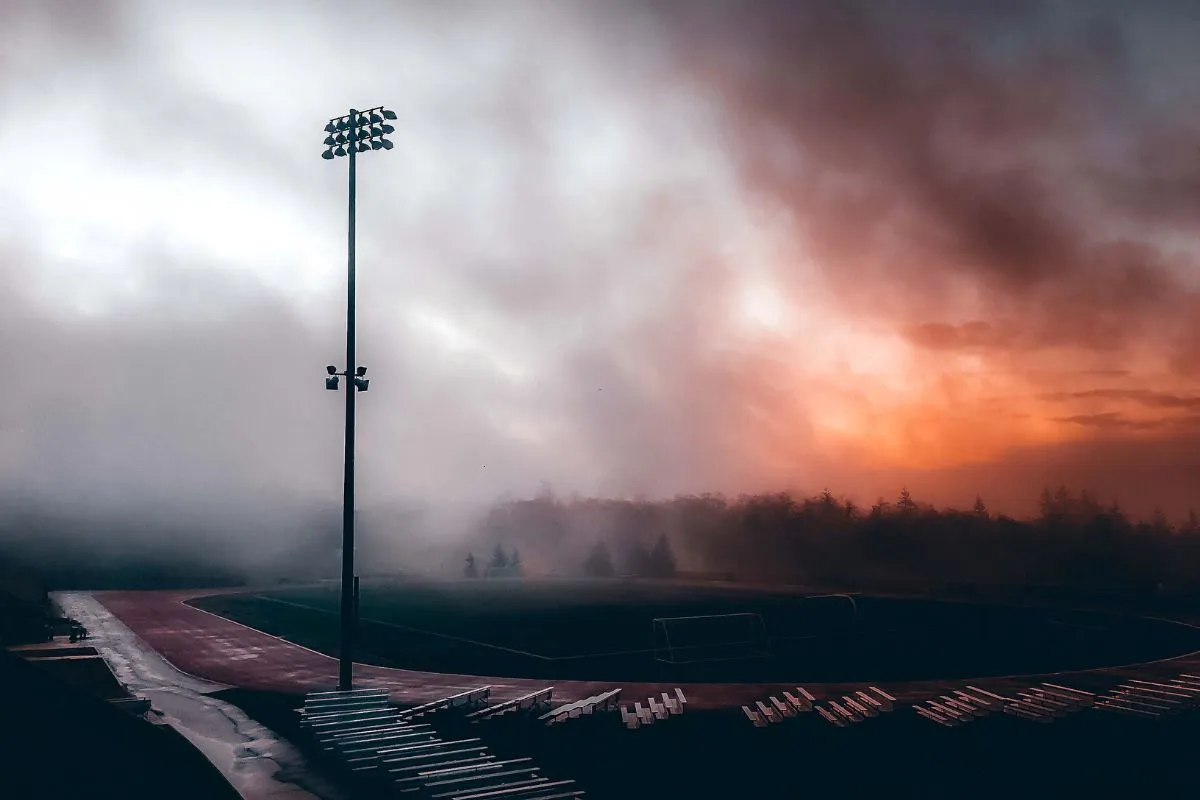
The match was supposed to start on schedule. Then the sky turned black over the stadium, lightning strikes were reported within a few kilometres of the ground, and the safety inspection team announced a precautionary delay. Within minutes, the official kickoff was pushed back, supporters were directed to covered areas, and both clubs began contingency planning for a fixture that might still face further disruption. Here is a complete update on the storm, the protocol behind the delay, the latest information on the new kickoff time, and what the disruption means for both teams and the wider fixture list.
Sommaire
ToggleMatch delayed: the storm timeline and the first official update
The storm system arrived faster than the local forecasts had suggested. Light rain began around two hours before the scheduled kickoff, with conditions steadily worsening over the following hour. By the time most supporters had taken their seats, heavy rain combined with strong winds was already producing surface water on the pitch perimeter, and the lightning warning system installed at the stadium triggered its first alert.
The match delegate met with the head referee and the stadium safety officer immediately after the initial alert. The standard protocol gave them clear authority to delay the kickoff if the lightning detection system identified strikes within a defined radius of the stadium. The first official update was published within twenty minutes of the initial alert, confirming a delay and asking supporters to seek covered shelter inside the concourses.
The communication was clear and well-coordinated. Both clubs activated their crisis communication plans, the broadcast partners adjusted their programming, and the stewarding teams shifted supporters to the safest areas of the stadium. The atmosphere remained calm, helped by transparent updates published every fifteen minutes through the official stadium channels.
What is happening at the stadium right now
The current situation involves continued weather monitoring, ongoing inspections of the pitch surface, and active communication between the match officials, both clubs, and the regional safety authority. Each of these processes has clear protocols, and the decisions are being made in coordination rather than in isolation.
Pitch conditions and safety inspection
The pitch inspection is being led by the head groundsman, the match delegate, and the head referee. Their assessment focuses on three main factors: the playability of the surface, the safety of players during high-speed transitions, and the drainage capacity of the pitch under continued rainfall. Modern Premier League and continental stadiums are designed to handle significant water volumes, but every venue has limits.
The current conditions show standing water in specific zones of the pitch, particularly near the corners where the drainage system processes the highest volume. The groundsman has activated supplementary pumps, deployed pitch covers in the most affected areas, and prepared additional staff for rapid intervention if the storm intensifies further.
Supporter information and stadium access
Stadium access has been temporarily restricted to ensure supporter safety. Latecomers are being directed to covered queueing areas, while those already inside the ground have been asked to remain in the concourses until the storm passes. The club’s communication team has activated additional staff to handle questions and provide regular updates through the public announcement system.
The safety teams have also prepared evacuation contingencies in case the conditions escalate. The plan includes coordinated exit routes, additional emergency personnel, and direct communication with local authorities. These precautions are standard in modern stadium operations and reflect the lessons learned from past extreme weather incidents across European football.
Why the kickoff was delayed: the safety protocol explained
The decision to delay the kickoff is based on a well-defined safety framework. Modern stadiums operate under strict protocols designed to protect players, staff, and supporters from weather-related risks, especially lightning, which remains the most dangerous element in outdoor sporting events.
Lightning detection systems and the 30-30 rule
The 30-30 rule is one of the most widely applied protocols in modern sports safety. The first thirty refers to the time interval between a lightning flash and the corresponding thunder. If the interval is under thirty seconds, the strike is considered to be within ten kilometres of the location, which triggers mandatory protective measures. The second thirty refers to the minimum waiting time after the last identified strike before activities can safely resume.
The stadium where today’s match is being played operates an automated lightning detection system that integrates with the safety protocol. The system tracks atmospheric electrical activity within a defined radius, alerts the match delegate automatically, and supports the decision-making process with real-time data. The combination of human judgment and automated detection creates a robust safety framework.
The role of the match delegate
The match delegate holds the central responsibility for weather-related decisions. He coordinates between the referee, the stadium safety officer, both clubs, and the relevant federation. His authority includes the right to delay the kickoff, suspend the match in progress, or postpone the fixture entirely if the conditions justify the call.
The delegate’s decisions are documented and reported to the relevant competition organiser. The reports become part of the official match file and can inform future regulatory discussions about weather protocols. The role requires both technical knowledge and strong communication skills, since the decisions affect tens of thousands of supporters and millions of viewers.
The latest update on the new kickoff time
The most recent update confirms a revised kickoff time, with the match now scheduled to begin approximately one hour after the original time. The delay reflects the continuing weather monitoring and the requirement to wait for the 30-30 rule conditions to be met before play can begin. The exact start time will depend on the next lightning detection check, which is scheduled within the next fifteen minutes.
If the storm continues to move away from the stadium, the match should begin on the revised schedule. If new lightning activity is detected within the protected radius, the delay will be extended, and supporters will receive additional updates through the public address system and the club’s official channels. The contingency planning includes a maximum waiting period beyond which the fixture will be officially postponed.
Consequences for both teams’ preparation
The disruption affects both teams’ preparation in significant ways. Pre-match warm-ups were interrupted, tactical briefings were adjusted, and the players have had to manage the mental impact of waiting in the dressing rooms for an extended period. The coaching staffs are experienced enough to handle these disruptions, but the impact on rhythm and focus is real.
The medical staffs are also adjusting their protocols. Extended warm-ups, repeated stretching sessions, and nutrition adjustments are all required to maintain player readiness during the delay. The risk of muscle injuries increases when players warm up, cool down, and warm up again, which is why these protocols are carefully managed in modern professional football.
The tactical preparation may also be affected. Both managers have to reconsider their game plans for the slippery surface, the potentially smaller crowd presence due to weather-related absences, and the unusual rhythm of starting a match nearly an hour later than planned. These adjustments are detailed, and they can influence the eventual outcome of the fixture.
Reactions from coaches, players and supporters
The reactions across the stadium and on social media reflect a mix of disappointment and acceptance. Most supporters have praised the safety-first approach, recognition that the protocol exists for good reasons and that the alternative would expose everyone to serious risk. The club’s communication team has received positive feedback for the clarity and frequency of the updates.
Both managers have spoken briefly to broadcasters during the delay. Their tone has been professional and understanding, with both emphasising that player and supporter safety must come first. Several senior players have shared images from the dressing rooms on social media, with one captain posting a message thanking the supporters for their patience during the unexpected wait.
The supporters’ associations have praised the coordination between the clubs, the match delegate, and the stadium safety teams. The transparent communication has been particularly appreciated, since rumour and uncertainty tend to amplify frustration during weather delays. The lesson for other clubs and competition organisers is clear: clear and frequent communication during disruptions is essential to maintain trust with supporters.
What happens if the match cannot be played today
The contingency plan includes specific protocols if the fixture cannot be completed today. The match delegate has the authority to postpone the entire fixture, with the rescheduling decision made by the competition organiser in coordination with both clubs. The new date would consider the European obligations of both teams, the broadcaster requirements, and the available stadium slots.
The refund and credit policies for supporters are also pre-defined. Ticket holders would receive a full refund or a credit for the rescheduled fixture, with additional support for those who travelled from abroad. The communication around these policies would be issued through official channels within twenty-four hours of the formal postponement announcement.
Similar weather-related disruptions across European football have provided useful precedents. Our piece on the La Liga match postponed after stadium safety concerns covers a parallel case where safety protocols took precedence over sporting and commercial considerations, with the rescheduling handled through a similar framework.
What this means for the broader fixture list
A delayed or postponed fixture creates ripple effects across the broader calendar. The competition organiser has to find a new slot that respects every other commitment, including European fixtures, international windows, and broadcaster schedules. The complexity grows when multiple matches across the same competition face weather-related disruptions on the same weekend.
The clubs themselves also have to adapt. Travel plans, training schedules, and recovery protocols all need adjustment, with the medical and conditioning teams coordinating closely to manage the additional load. Recent matchday storylines worth following include the Premier League upset where the underdog stunned Liverpool, which highlighted how unpredictable elite football has become, and the Dortmund expected goals edge against Bayern in the latest stat analysis, which shows how data-driven analysis is reshaping pre-match coverage at every level.
For now, the priority remains the storm itself. The next official update will confirm whether the match begins on the revised schedule or whether further delays become necessary. You should follow the official channels for the most accurate information, and remain prepared for any scenario over the next two hours.