Silence filled the Stockport courtroom as the verdict was read. Years of waiting had led to this moment. Nobby Stiles. England’s World Cup hero whose relentless midfield grit defined an era, died in 2020 after a long battle with severe dementia. Now, a coroner confirmed what his family had long suspected: the countless headers he made throughout his career caused the brain disease that ultimately took his life.
Neuropathology expert Dr Daniel Du Plessis didn’t mince words. “I’m quite convinced his heading the football that many times has caused his CTE,” he told the court. Chronic traumatic encephalopathy, the brain condition linked to repeated head trauma, was a major factor in Stiles’ decline. Senior Coroner Alison Mutch listed Alzheimer’s disease as the primary cause of death, with CTE and other neurodegenerative conditions contributing. For the first time, the official record acknowledged a link that has haunted football for decades.
Years of Sacrifice, a Family’s Fight
For the Stiles family, the inquest brought both closure and a new sense of purpose. Outside the courthouse, his son John called the ruling “no surprise.” He had witnessed his father’s final years in a care home, where the memories of 1966 glory faded into frailty and confusion. The medals and mementos from England’s greatest sporting triumph were sold to pay for care.
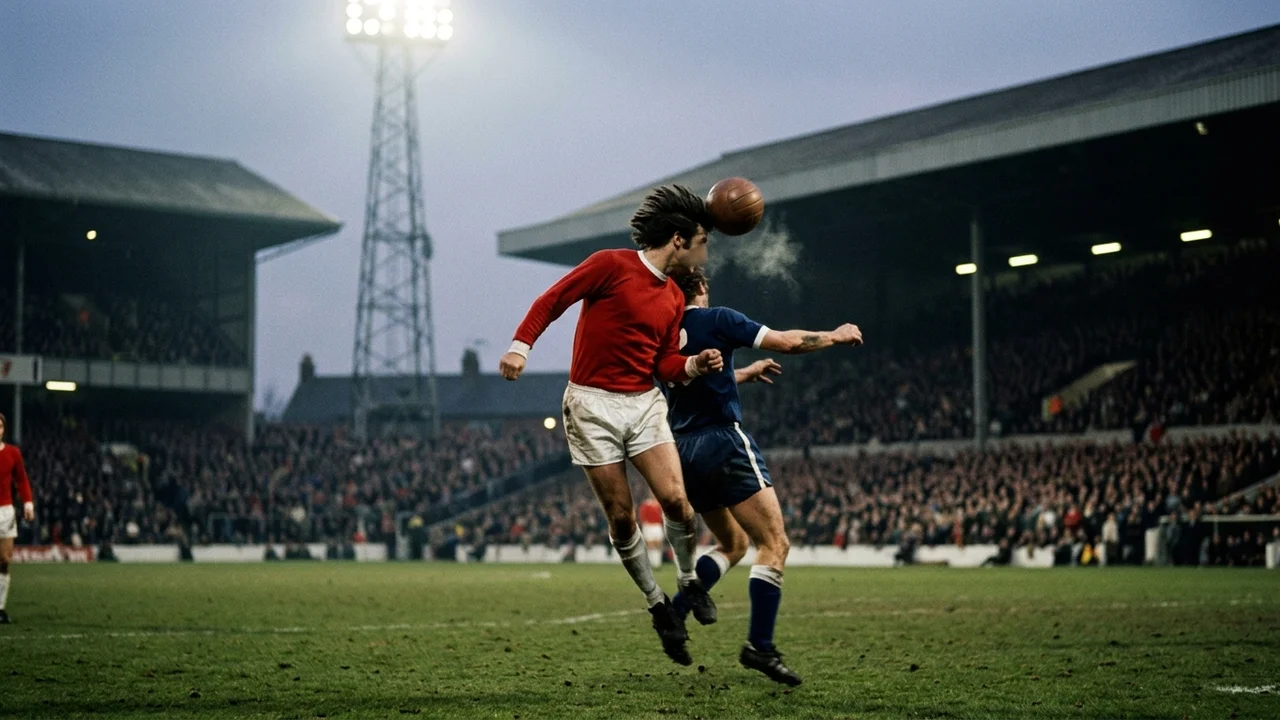
John Stiles laid out the brutal arithmetic of his father’s career: at least 40 headers a day, five days a week, over a 10-month season. In court, he estimated that added up to about 140,000 headers. “Heading the ball in training was absolutely massive,” he said. Despite the fame. Nobby Stiles remained grounded. “He went into his house and you wouldn’t know he was a footballer. Football was left at the door. Family was always his first priority and then his friends,” John recalled.
Asked whether football dominated his father’s life. John’s answer was blunt. It didn’t. The game was a job, not an obsession. Yet its cost shaped the family’s story for decades.
Anger still simmers. The Stiles family accuses football authorities of “refusing to provide help” for former players suffering the long-term effects of their careers. John warned his father’s case could be just the beginning.
Football’s Reluctance and the Road Ahead
The inquest reignited a debate football has long tried to avoid. Stiles, the tough-tackling Manchester United legend, played nearly 400 times for his club and 28 times for England, including that iconic 1966 World Cup win. His victory jig, clutching the Jules Rimet trophy in one hand and his false teeth in the other, remains an indelible image in English sporting history.
Behind the celebrations, the damage was accumulating. Analysis of Stiles’ brain revealed severe dementia caused by Alzheimer’s disease and CTE, both linked to repeated head trauma from heading footballs. Authorities never reported Stiles’ death to the coroner at the time. Only the family’s relentless campaigning led to a full investigation.
Their efforts have forced football’s governing bodies into the spotlight. The family insists the sport must do more for those suffering from conditions tied to its physical demands.
For those tracking how player welfare debates are reshaping the nfpl, some have begun to scrutinise how off-pitch matters are shifting the landscape.
Now, with the court’s decision echoing across the sport, one question hangs in the air: will this landmark ruling finally force football to confront the risks its heroes have endured for generations? The Stiles family expects this to be the beginning of a new era, not just for Nobby, but for every player who ever put their head on the line.