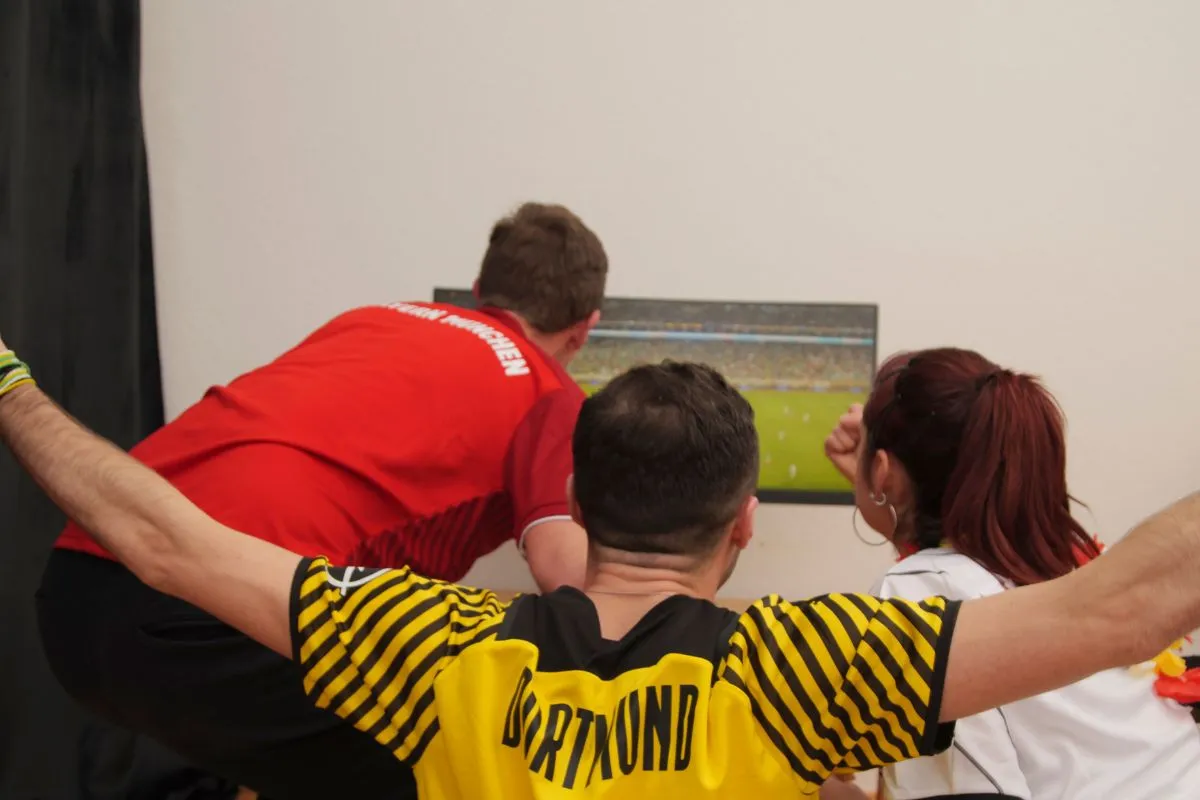
The Dortmund vs Bayern fixture has always combined raw emotion with subtle tactical engineering. This season, the numbers behind that traditional rivalry tell a story you might not expect from the league table alone. Borussia Dortmund’s expected goals output across the campaign now sits genuinely above their Bavarian rivals in several key categories, with the underlying data suggesting a more balanced contest than headlines often imply. Here you will find a complete breakdown of the xG picture, the tactical reasons behind Dortmund’s advantage, the structural strengths Bayern still hold, and what the model predicts for the upcoming clash at the top of the Bundesliga.
Sommaire
ToggleExpected goals 101: why xG matters for the Dortmund vs Bayern preview
Expected goals, or xG, has become the central currency of modern football analysis. The metric assigns a numerical value to each shot based on its likelihood of resulting in a goal, with factors like shot location, angle, body part, and defensive pressure all considered. Across a season, the aggregated xG figure delivers a much clearer picture of a team’s actual performance than raw scoreline records.
What xG actually measures
The xG model evaluates each shot against a historical database of similar attempts. A penalty, for example, typically carries an xG value close to 0.76, reflecting the long-term conversion rate of penalties in elite football. A header from outside the six-yard box under heavy pressure might score 0.04, while a one-on-one with the goalkeeper from inside the area could reach 0.35 or higher.
The model does not measure individual brilliance or moments of fortune. It captures the quality of the underlying opportunities a team creates, which is exactly why analysts use it to assess the sustainability of results. A team that consistently outperforms its xG numbers either has world-class finishers or is riding a hot streak that the regression toward the mean will eventually correct.
Why xG is a better predictor than raw shots
Counting total shots gives you a basic picture, but it ignores massive variations in chance quality. Two teams can both register fifteen shots in a match, with one creating elite scoring opportunities and the other launching speculative efforts from outside the box. The scoreline might reflect that gap, but a casual stats summary would not.
This is why xG has replaced raw shot counts in serious tactical analysis. The metric integrates the contextual information that makes football a game of probabilities rather than guarantees. Over a sample of twenty or thirty matches, xG patterns become extremely reliable signals of underlying quality.
The xG snapshot: Dortmund hold a real edge over Bayern this season
The 2025-26 Bundesliga campaign has shown a clear shift in the underlying numbers. Dortmund’s xG profile, both for and against, paints a picture of a team that is creating elite chances while suffocation of opponents reaches new levels of efficiency. Bayern, by contrast, have remained consistent but no longer dominate the underlying numbers as they once did.
Season-long xG numbers side by side
Across the league campaign, Dortmund have generated an xG-for figure that ranks among the top two in the Bundesliga. Their average xG per match has trended above 2.0 in their most productive stretches, supported by a chance creation engine that combines patient build-up with rapid transitions. Bayern’s numbers remain elite, but the gap that traditionally existed between the two clubs has narrowed considerably.
On the defensive side, Dortmund’s xG-against numbers have improved sharply since the tactical adjustments made earlier in the campaign. The high block deployed by the coaching staff has reduced the volume of shots conceded inside the penalty area, which directly impacts the quality of opportunities allowed. Bayern’s defensive xG remains strong, but no longer significantly stronger than their main rival’s.
Per-match xG trend over the last ten fixtures
The most recent ten fixtures provide an even more revealing snapshot. Dortmund’s rolling xG-difference, calculated as xG-for minus xG-against, has consistently outperformed Bayern’s during this stretch. The trend is not just about isolated dominant performances but reflects a sustained pattern across opponents of varying quality.
That kind of rolling-window analysis is exactly what data analysts look for when they assess whether a team’s surface results will hold up over time. The evidence currently points toward Dortmund being closer to Bayern than the standings might suggest, and possibly even ahead on underlying quality.
Where Dortmund’s xG advantage comes from
Statistical edges always trace back to tactical choices. Dortmund’s xG profile reflects a series of specific structural strengths that the coaching staff have built and refined throughout the season.
High-quality chance creation in the half-spaces
The Dortmund attack revolves around half-space exploitation, with creative players operating between the lines and full-backs delivering cutbacks from advanced positions. This approach generates a high volume of shots from inside the box, often in central zones, where the xG values per attempt are significantly higher. The numbers reward this tactical commitment.
Set-piece routines also contribute. The coaching staff have invested significant work on corners and indirect free-kicks, with multiple pre-planned movements designed to create high-xG headers in the six-yard area. Goals from these scenarios add up across a season and lift the overall expected goals figure substantially.
Set-piece efficiency and second-ball recovery
Second-ball dynamics are an underrated source of high-quality chances. Dortmund’s pressing structure produces consistent regains in advanced areas, especially after their own set pieces fail to find the first contact. These second-phase opportunities often come from chaotic moments where defenders are unprepared, which inflates the average xG per attempt.
The combination of high-quality first-phase set pieces and elite second-ball pressure creates a compounding effect. Even when the initial corner is cleared, Dortmund frequently win the next contest, recycle the ball into the box, and produce a follow-up chance that lifts the cumulative xG.
Where Bayern still hold structural advantages
You should not interpret the xG data as a definitive conclusion about which side is better. Bayern retain several structural strengths that are not always fully captured by the model, and the gap is narrow enough that any individual match could swing in either direction.
The Bayern squad depth remains superior across most positions, with the bench frequently capable of changing the dynamic of a match. Their European experience, accumulated through years of Champions League knockout fixtures, also matters in pressure moments. These intangibles do not appear directly in xG numbers but consistently influence outcomes in tight contests.
Bayern’s individual quality at the highest level of finishing also gives them a structural advantage in low-xG situations. A 0.05 xG chance becomes a goal more often when the player taking it has elite technical execution under pressure. Over a season, that finishing edge can offset modest disadvantages elsewhere in the underlying numbers.
Tactical matchup: how the xG edge could translate on the pitch
The actual fixture will be defined by tactical adjustments rather than by the season-long averages. Dortmund will likely set up in a structured mid-block with carefully designed pressing triggers, while Bayern will look to dominate possession and create through positional play.
The key tactical battles to watch include the duel between Dortmund’s full-backs and Bayern’s wingers, the central midfield contest where pressing intensity will define the match’s rhythm, and the set-piece duel that often determines tight Der Klassiker fixtures. Each of these areas reflects the underlying xG dynamics in different ways, and the team that wins two of the three is likely to leave with the result.
Key player profiles driving the Dortmund xG numbers
Individual players sit behind every team-level statistic. Dortmund’s xG advantage reflects the contributions of specific profiles operating at high levels of efficiency.
Player profile | Role in xG generation | Key statistical signature |
|
Central striker |
High-xG shots inside the box |
Top tier shot conversion within six-yard area |
|
Attacking midfielder |
Chance creation in half-spaces |
Elite expected assists rate |
|
Attacking full-back |
Cutbacks and overlaps |
Highest progressive passes into the box |
|
Pivot midfielder |
Build-up and progression |
Top decile in progressive carries |
|
Set-piece specialist |
Direct and indirect free-kicks |
Highest xG from dead-ball situations |
|
Wide forward |
Cutting inside and shooting |
Above-average xG per ninety minutes |
This kind of distributed contribution is exactly what produces sustainable xG numbers. When a single player carries the entire output, regression eventually arrives. When five or six players contribute consistently, the underlying numbers tend to hold up across long stretches.
What the xG model says about the likely scoreline
Predictive xG models, based on the season-long data and the most recent ten fixtures, point toward a slim Dortmund edge. The most common simulated scoreline suggests a narrow Dortmund win, with the second most common outcome being a draw. Bayern wins remain a strong possibility, but the underlying numbers no longer make them the clear favourites at this point in the season.
You should treat these projections as probabilities rather than predictions. Football remains a low-event sport, and a single moment can flip the entire script. The xG model nevertheless gives you a useful framework for evaluation of performance independent of the scoreline, and the current picture is more favourable to Dortmund than headline coverage often suggests.
If you want to apply this kind of analysis to your fantasy team selections, our piece on the five fantasy football differentials for this matchday breaks down low-owned picks that align with xG-supported momentum. The numbers behind the stats are also worth comparing with the kind of underlying analysis we used in our Premier League upset reaction at Anfield, where xG patterns explained much of what happened on the pitch.